FLICKERING LIGHTS:
WHAT'S NORMAL, WHAT ISN'T.
Not all flicker means trouble. A little flutter from an LED bulb on a dimmer designed for incandescent is annoying but harmless. A dim-and-surge that happens when the AC kicks on is a different animal entirely.
The harmless kind: dimmer incompatibility
Older dimmers designed for incandescent bulbs often can't cleanly handle LEDs — the LED minimum-load is too low. Solution: swap to a modern LED-rated dimmer. Look for "ELV" or "forward-phase and reverse-phase compatible" in the spec sheet.
The warning kind: lights dim when big loads cycle
Lights briefly dim when your AC, pool pump, or well pump starts. A tiny dip is normal (inrush current). A visible, repeated dim — especially if unrelated fixtures flicker simultaneously — points to a loose connection somewhere in the branch circuit or at the panel lugs. That is worth finding, because loose connections heat up.
The serious kind: half the house dims, or half brightens
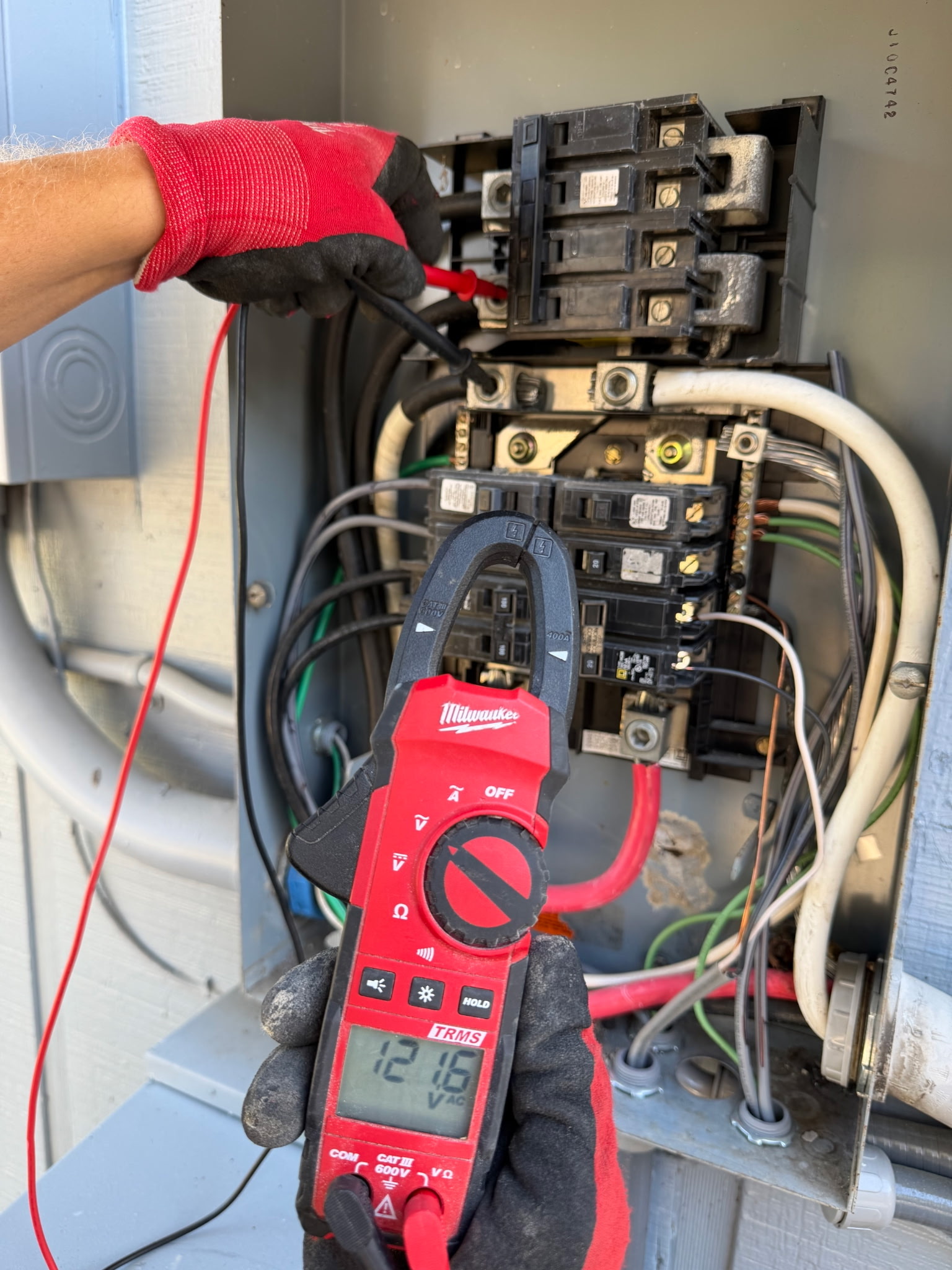
If lights on one side of the house dim while lights on the other side brighten, suspect a failing service neutral. This is a serious fault — it can push 240V into 120V devices and destroy electronics in seconds. Kill the main breaker and call a licensed electrician. Do not keep using the house.
The fire kind: a single fixture flickers and feels warm
One light or outlet that flickers and feels warm to the touch is arcing. Arcing is one of the top causes of residential electrical fires. Kill the breaker for that circuit, do not use it, and get a professional diagnosis that day.
Need a licensed electrician?
Forty years of Florida electrical work. Licensed Master Electrician. Free estimates. Same-day response. 24/7 for emergencies.
When to call right away
- Flicker plus a burning smell
- Lights dimming and brightening in opposite halves of the house
- Warm outlets, switches, or fixtures
- Flicker that coincides with visible arcing or sparks
Related: troubleshooting & repairs · 24/7 emergency.