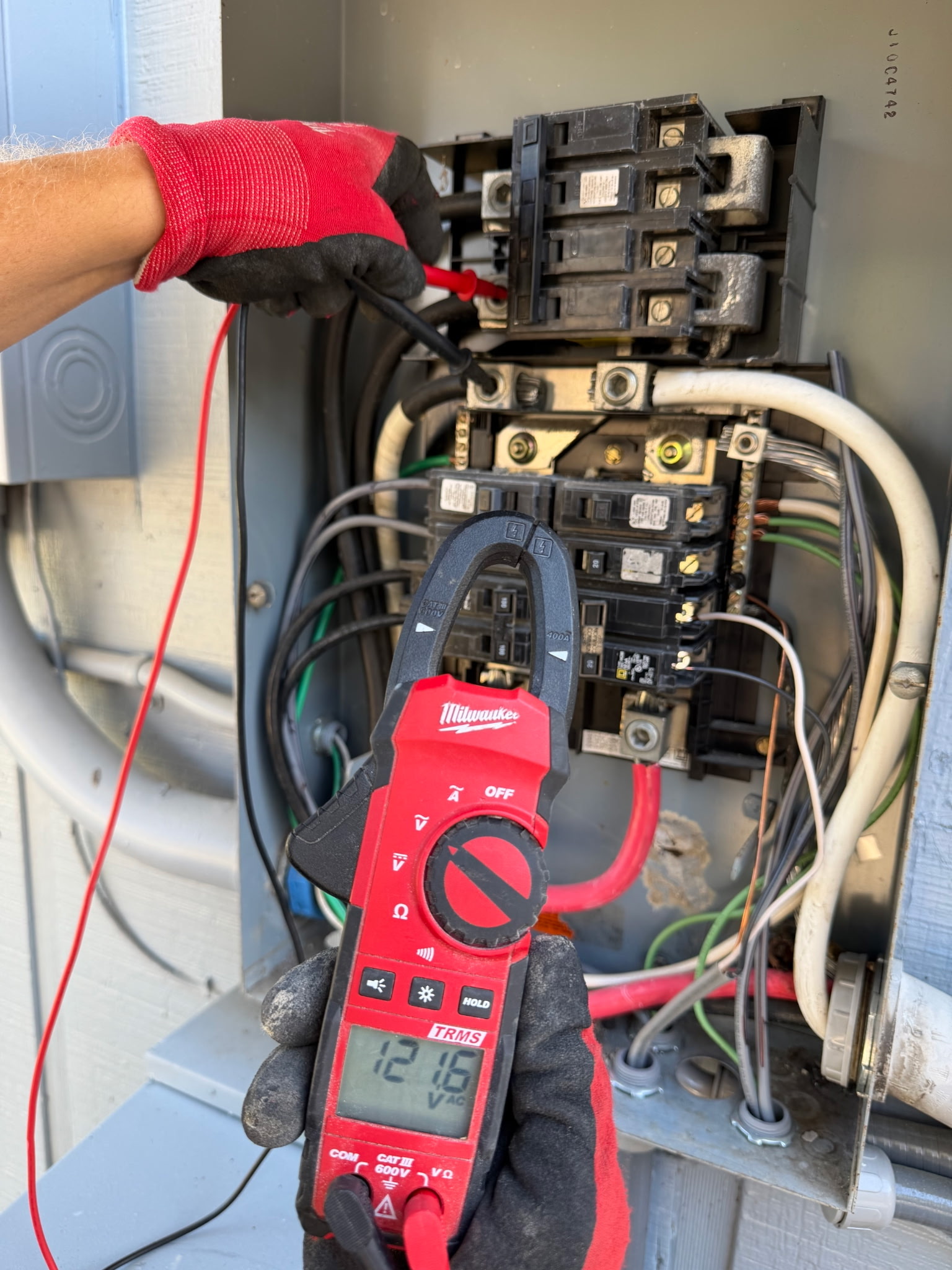
SPOTTING FAULTY WIRING
BEFORE IT CATCHES FIRE.
Electrical fires almost never happen "out of nowhere." The wiring gives you warnings first — sometimes for months. The trick is knowing what to look for.
Warning signs you can see
- Warm outlets or switches. A switch that feels warm when nothing is dimmed, or an outlet that is hot to the touch, has a loose or arcing connection inside.
- Scorched or discolored cover plates. Brown or yellow staining around the slots of an outlet means heat is escaping.
- Burning-plastic smell. Often strongest at the panel, switch, or outlet where the fault is. Follow your nose, then kill the circuit.
- Nuisance breaker trips. A specific circuit that trips weekly is not "just overloaded" — something in that circuit has changed. Find the cause.
- Two-prong outlets in new construction or remodel areas. Common tell that a prior owner or handyman worked without a permit.
- Backstabbed outlets. Push-in terminals loosen over time. Wires under screws on the side are more reliable.
Warning signs hiding in the walls
Some faults don't surface until they fail. Aluminum branch wiring loosens at the connection over decades. Staples driven too hard during framing can nick the insulation. Rodent damage in attics. UV-degraded cable in sun-exposed conduit. Florida's heat and humidity speed all of these up.
When an AFCI breaker helps
AFCI (arc-fault circuit interrupter) breakers detect the high-frequency signature of an arc and trip before it becomes a fire. Florida code requires them on most habitable-space circuits in new construction. Adding them to existing panels during a panel upgrade is cheap insurance.
What to do if you suspect a problem
- Stop using the circuit
- Kill the breaker for that circuit (not the main, unless you can't identify the breaker)
- Note what you saw, smelled, or felt, and when it happened
- Call a licensed electrician for a diagnostic visit — not a handyman
Need a licensed electrician?
Forty years of Florida electrical work. Licensed Master Electrician. Free estimates. Same-day response. 24/7 for emergencies.
What a diagnostic visit looks like
We identify the affected circuit, trace it back to the panel, and inspect every junction point — outlets, switches, fixtures, splices in boxes. Where it is safe to open the wall, we do. Where it is not, thermal imaging and circuit analysis tell us what we need. The report comes with a written quote and a priority rank: fix now, fix soon, or watch.
Related: troubleshooting & repairs · 24/7 emergency service.